Trouble with a landlord: your photos and papers
What to do
- Read your lease again. USA.gov, the US government’s guide, says to start there before you get outside help.
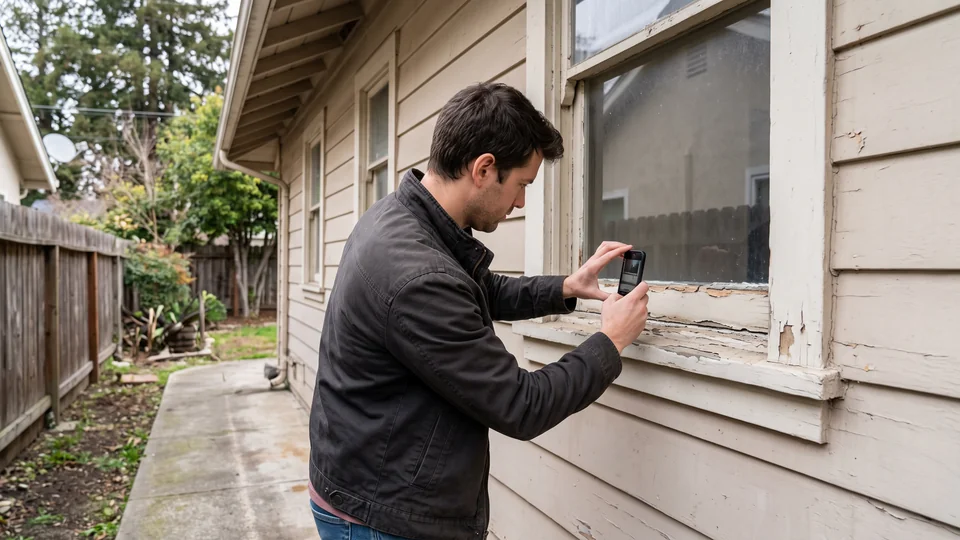
- Take photos or videos of your home when you move in, when something goes wrong and when you move out.
- Keep the original photos and videos on your iPhone. Save a backup too.
- Keep your lease, your letters and your landlord’s texts and emails.
- Ask for repairs in writing. Keep a copy of each request.
- After each talk with your landlord, write down the time, the place, who you spoke with and what was said.
- Complain to the housing office or council where you live. The sections below say who to ask.
- Ask a lawyer or a legal aid office about your own home. Rules differ by state, province and country.
If someone threatens you or tries to remove you from your home, call the police. In an emergency, call 911 in the US and Canada, or 999 in the UK.
Photos and records: what the agencies say
Canada. The Canada Mortgage and Housing Corporation (CMHC), the federal housing agency, says to consider taking photographs or recording both the move-in and the move-out inspections. CMHC also tells tenants to use a smartphone to record or photograph any problems, and to save a backup of the file.
California. The state’s attorney general says tenants should document health and safety problems with texts, emails, letters and certified mail, and also with videos and photos. The attorney general says to keep a copy of any communications with your landlord.
British Columbia. The province says to document each talk: the time and place, who you spoke with and a summary of what was said. The province also says to send letters in a way that can be confirmed, like email or registered mail, and to keep a copy.
Who to ask in the US
Rules differ by state and city. USA.gov says to find your state agency for tenant rights, such as your attorney general or a housing agency. USA.gov also lists ways to find affordable legal aid.
HUD-insured or HUD-assisted housing. HUD, the US housing department, runs a Multifamily Housing Complaint Line, at 1-800-685-8470. The line takes complaints about poor maintenance, dangers to health and safety, mismanagement and fraud.
Housing discrimination. HUD says its Office of Fair Housing and Equal Opportunity handles these complaints, at 1-800-669-9777.
California. The attorney general’s page says that if a landlord refuses to make repairs, tenants should contact the local code enforcement office or health department. The page also says a landlord can’t retaliate against a tenant for exercising the tenant’s rights.
New York. The attorney general’s tenants’ guide says harassment can include physical or verbal abuse, willful denial of services and disruptive construction. Tenants in rent regulated homes can contact DHCR, the state’s housing agency. The guide says New York City tenants can also bring a claim in housing court.
Who to ask in Canada
Each province and territory has its own rules. These 2 provinces are examples.
Ontario. The Landlord and Tenant Board resolves disputes. The province’s Rental Housing Enforcement Unit takes complaints about offences, at 1-888-772-9277. One example of an offence is a landlord shutting off water, heat or electricity.
Ontario says to write to your landlord first. Keep a copy of your requests and any replies, and note how long your landlord took to respond. For a complaint, the unit asks for your name, the date, what happened and any supporting documents. The unit doesn’t take anonymous complaints.
British Columbia. The province says to try talking first, and then a letter. After that, you can apply for dispute resolution, the formal process for landlords and tenants. The province’s Residential Tenancy Branch can help.
Who to ask in England
GOV.UK says it’s a crime for your landlord to harass you, or to try to remove you without following the correct process. GOV.UK says harassment can include stopping services like electricity, withholding keys and refusing repairs that are the landlord’s job. Harassment can also include threatening to change the locks or opening your post.
GOV.UK says to contact the police if physical violence or threats are involved. Contact the police too if someone tries to remove you or your things without a court order or a court-appointed bailiff.
GOV.UK says to talk to your local council if you think you’re being harassed or threatened with illegal eviction. The council may have someone who specialises in tenant harassment. You could also contact a legal adviser. GOV.UK’s page covers England, so ask your council about other rules if you live elsewhere in the UK.
Keep copies in a vault
Underlock is coming soon to the App Store. Here’s how it will work.
Underlock is a private vault app we make. You open your vault by drawing a pattern on a grid of dots. A vault is a place to keep copies, nothing more. Underlock doesn’t fix a problem with a landlord, and Underlock doesn’t change the law.
Importing puts a copy of each photo in your vault. Keep the originals where they are until a lawyer or the office handling your complaint says otherwise. So take these photos with the Camera app, not Underlock’s camera.
- Take the photos with the Camera app. The originals stay in the Photos app.
- Open Underlock.
- Draw your pattern to open your vault.
- Tap the Add button (a plus sign), then Import from Photos.
- Choose the photos.
- Keep Underlock open until the import finishes.
- When Underlock asks Remove the originals from Photos?, tap Keep.

For a lease or a letter saved as a PDF, tap Import from Files instead. When Underlock asks Remove the original from Files?, tap Keep. For a note of a talk, tap Add, then New note.
What Underlock does
- A folder for your home. Put the photos, lease and letters in one folder. Folder and file names are encrypted along with your files.
- Your passcode doesn’t open your vault. Your vault opens with your own pattern, a shape you draw on a grid of dots, not your iPhone passcode or Face ID.
- Asks before a file leaves. To send a copy to a lawyer or a tenant board, open the file, then tap Share. Underlock asks first, because a shared file leaves your vault and is no longer encrypted.
- Location stays out by default. A shared file leaves without its location. To keep the location, turn off Remove location before you share.
- Underlock doesn’t change the law. If a court, a tenant board or an agency asks for what you keep, ask a lawyer what to do.